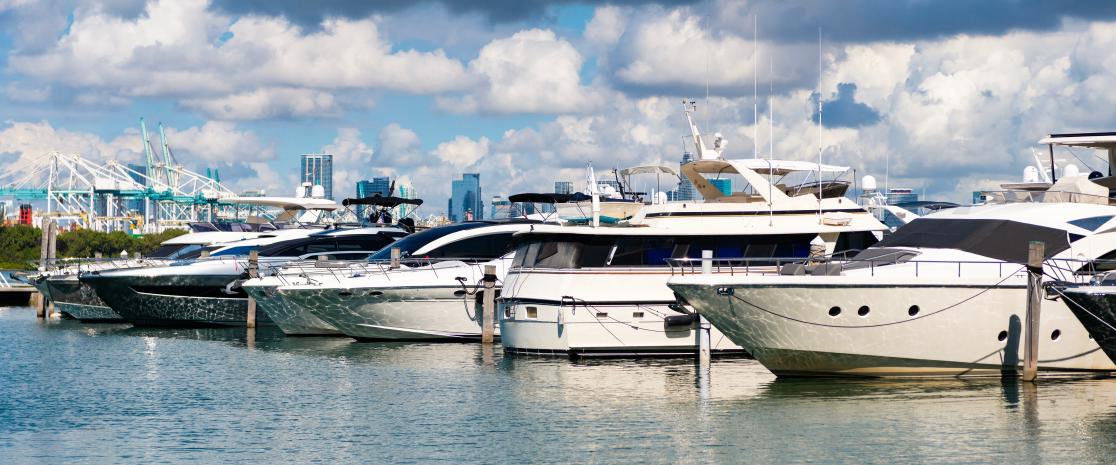
Florida is one of the biggest boating states in the country. Vessels change hands here all the time, including federally documented boats with U.S. Coast Guard paperwork attached. And if you are in the middle of one of those sales, there is a good chance at least one party in the deal is not physically in the same place as the other. A seller living in Michigan. A buyer in the Bahamas. A broker coordinating everything from a marina office three states away.
Getting the paperwork notarized used to mean someone had to find a notary, show up in person, and hope that person actually knew what a CG-1340 was. Now there is a better option. USCG bill of sale notarization can be handled remotely through a Virginia-commissioned online notary, and the result is accepted by the Coast Guard’s National Vessel Documentation Center.
Why USCG-Documented Vessels Require Notarization in the First Place
When a vessel is federally documented through the U.S. Coast Guard, state title rules do not apply. The documentation is federal, governed by the National Vessel Documentation Center and Title 46 of the Code of Federal Regulations. That is a different process than registering a small fishing boat with the Florida DMV.
For ownership to transfer legally on a documented vessel, the seller must sign a properly executed bill of sale. The standard form is the CG-1340, and under federal regulation, every seller listed on the Certificate of Documentation must sign it. Every signature must be notarized. This is not a suggestion. The NVDC will not process the transfer without it.
The notarization has to substantially comply with state notarial law, which means a properly executed remote online notarization under state RON statutes is accepted. The Coast Guard is looking for a valid notarial act, not a specific method of delivery.
What the CG-1340 Form Actually Requires
Before scheduling any notarization, it helps to know what the form needs. The CG-1340 Bill of Sale must include the full legal names and addresses of both the seller and buyer, the vessel’s official number and name, a description of the interest being transferred, and the consideration, meaning what was paid or exchanged.
Every seller listed on the existing Certificate of Documentation must appear on the bill of sale and must sign. If there are two co-owners, both signatures need to be notarized. This is where remote notarization becomes practical: you do not need both sellers in the same room, or even in the same country. Each can connect to a notary session separately if needed.
The form itself is available as a fillable PDF through the National Vessel Documentation Center. Fill it out completely before the notary session. Incomplete forms are one of the most common reasons a submission gets returned.
How Remote Notarization Works for a Florida Boat Sale
Florida has allowed remote online notarization since 2020 and has one of the more mature RON frameworks in the country. A Florida-based seller can connect with a commissioned notary online, verify their identity over a live audio-video session, sign the CG-1340 electronically, and receive a notarized document without leaving the house.
But the notary does not have to be a Florida notary. A Virginia-commissioned online notary can handle the same transaction, and the resulting notarization is accepted under federal documentation rules. Virginia’s RON law is among the oldest and most clearly established in the country, and Virginia-commissioned notaries are authorized to serve signers anywhere in the world on U.S.-related matters.
The session itself takes about 15 to 20 minutes when the documents are prepared in advance. The notary reviews the CG-1340, verifies the signer’s identity through credential analysis and identity proofing, witnesses the electronic signature, applies an electronic seal, and produces the notarized document as a downloadable file. That file goes to the buyer or directly to the NVDC as part of the transfer packet.
What You Need to Prepare Before the Session
A remote notary for Florida boat sales will ask for three things: a completed CG-1340 form, a valid government-issued photo ID, and a working device with a camera and microphone for the video call. That’s the short list.
The longer version: make sure the vessel name and official number on the CG-1340 match exactly what appears on the Certificate of Documentation. Even a small discrepancy, a missing word in the vessel name or a transposed digit in the official number, can get the submission rejected. Check it twice before uploading.
If there is a lender involved, or if the vessel had a preferred ship mortgage recorded with the USCG, there may be additional discharge paperwork required before the transfer can be recorded. A good notary service will flag this for you during the document review, but it is worth knowing about in advance.
And if the buyer is overseas or the seller is traveling internationally, that is not a problem for remote notarization. The session can be completed from anywhere with a stable internet connection. The notary’s physical location in the U.S. is what anchors the legal act.
Common Mistakes That Delay USCG Submissions
The most frequent issue is a missing co-owner signature. If a vessel is titled to two people and only one signs the bill of sale, the NVDC will return the packet. Both co-owners must sign and both signatures must be notarized. Remote sessions can accommodate this with separate appointments if the co-owners are in different locations.
The second common issue is using a notary who is not familiar with the CG-1340 format. A general notary who mostly handles real estate or power of attorney documents may not know that the notarial certificate language needs to match federal documentation standards. Using a notary service that regularly handles USCG documents removes that uncertainty.
The third issue, which is less common but worth mentioning, is submitting the form before confirming that all existing liens have been cleared. The NVDC records preferred ship mortgages, and if one is outstanding, the transfer cannot be recorded cleanly. Check the vessel’s documentation status through the NVDC before submitting.
After the Notarization: What Happens Next
Once the CG-1340 is notarized, the buyer submits it to the National Vessel Documentation Center along with a completed Application for Initial Issue, Exchange, or Replacement of Certificate of Documentation, and the applicable fees. The NVDC processes the transfer and issues a new Certificate of Documentation in the buyer’s name.
Processing times vary. The NVDC offers an expedite option for an additional fee if the timeline is tight. Some boat closings use a documentation agent to manage the submission, which can help if either party is unfamiliar with the federal process.
The seller’s responsibility ends once the notarized CG-1340 is delivered. But keeping a copy, along with the session recording if the notarization was done remotely, is good practice in case questions come up later.
Remote NotarEZ has handled USCG vessel documentation and boat bill of sale notarizations for individual sellers, brokers, maritime attorneys, and title companies across Florida and beyond. If you have a documented vessel changing hands and need the CG-1340 notarized, reach out before you schedule. A free document review is included, and the session can usually be completed the same day.
Visit the Florida online notary services page or the USCG vessel and boat documentation page for more detail.
Ready to book? Request an appointment and upload your documents here.
Phone: +1 (757) 271-3004
Email: info@remotenotarez.com