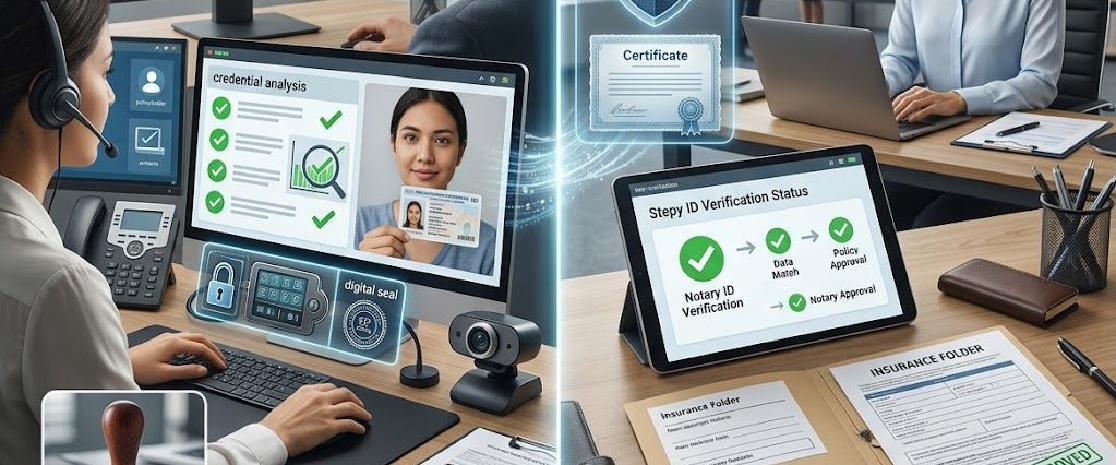
As digital services expand, verifying online identities has become critical for insurers. An online notary for insurance companies offers a structured, technology-driven way to confirm policyholder identities while prioritizing security and legal compliance. This article explains how Remote Online Notarization (RON) protects identity verification, the tools and checks it uses, the risks to watch for, and practical steps insurers can take to strengthen the process. Core elements such as credential analysis, biometric checks, and regulatory compliance underpin trust in RON for insurance workflows. Learn more about integration options on Remote NotarEZ.
With identity fraud on the rise, insurers need reliable verification methods that balance security with customer convenience. Below we cover the key verification technologies, fraud prevention techniques, and how providers like Remote NotarEZ can strengthen identity checks. Following best practices and keeping pace with regulation helps insurers use RON confidently and protect policyholders.
Methods used for identity verification
Effective RON verification layers several methods to reduce fraud risk. Typical techniques include credential analysis, which inspects submitted documents for authenticity; biometric checks that compare live traits to a claimed identity; and knowledge-based authentication (KBA), which verifies personal knowledge unique to the policyholder. Providers such as Remote NotarEZ combine these controls into a cohesive, layered approach.
Together these technologies create multiple hurdles for would-be fraudsters, improving confidence for both insurers and customers. Understanding each method helps insurers design verification flows that are both secure and user-friendly.
Potential risks
RON brings strong protections, but risks remain. Insurers should be aware of the main threats:
- Identity fraud: Attackers may use stolen or forged documents to impersonate a policyholder.
- Technical failures: System outages, misconfigurations, or user errors can disrupt verification or expose data.
- Data breaches: Unauthorized access to stored or transmitted personal data can undermine trust and compliance.
Addressing these risks proactively is essential to keep sensitive policyholder information secure and preserve trust in verification processes.
Best practices for ensuring identity verification security
Insurers can reduce RON-related risks by adopting proven safeguards. Recommended actions include:
- Use reputable providers: Choose vendors with a clear compliance record and strong security controls.
- Maintain session records: Keep detailed logs and recorded sessions to support audits and dispute resolution.
- Provide regular training for notaries: Ensure notaries understand current threats, technology, and legal obligations.
Applying these practices helps insurers tighten defenses and maintain the integrity of their verification workflows.
What identity verification technologies ensure security in Remote Online Notarization for insurance?
Several technologies work together to secure RON in the insurance sector. Common components include:
- Video conferencing platforms: Secure real-time audio/video links let notaries verify appearance and behavior directly.
- Credential analysis: Automated checks and human review confirm document authenticity and consistency with known standards.
- Digital signature software: Legally binding e-signatures and tamper-evident records protect documents and streamline workflows.
These elements form a resilient framework that reduces the likelihood of identity fraud during online notarization.
How does credential analysis enhance accuracy in policyholder identity verification?
Credential analysis is central to reliable RON identity checks. The process typically includes:
- Document submission: Collecting required identity documents in acceptable formats.
- Authenticity checks: Comparing submitted documents against databases and security features to detect forgeries.
- Regulatory compliance: Ensuring verification steps meet legal and industry standards for identity proofing.
Strong credential analysis raises verification accuracy and reduces the chance of fraudulent access.
Which biometric and authentication tools are used in insurance remote notarization?
Biometric and authentication tools are key to strengthening identity checks in RON. Typical tools include:
- Biometric validation: Facial recognition, fingerprint matching, or voice analysis used to confirm a live identity.
- Multi-factor authentication: Combining passwords, one-time codes, or biometrics to add security layers.
- Knowledge-based authentication: Challenge questions based on a person’s history that only the rightful policyholder should answer.
These tools support broader efforts to raise authentication standards across service industries.
Biometric authentication in notary and insurance for enhanced security This piece examines how live-scanning and digital ID tools can be integrated across notary, insurance, legal, and financial services. It highlights biometric benefits—reducing fraud, speeding processes, and improving customer trust—while outlining organizational and technical factors needed for success and sharing international use cases.Live Scan and Digital Identification: Prospects For Implementation In Comprehensive Service Companies, 2025
These technologies substantially reduce the chance of unauthorized access and identity theft when applied correctly.
How do fraud prevention tools protect insurance companies during online notarization?
Fraud prevention tools are essential to limit identity fraud in RON. Key elements include:
- Identity proofing: Verifying a policyholder’s identity thoroughly before completing notarization.
- Session recording: Audio and video captures provide an audit trail for compliance and investigations.
- Encryption and data security: Protecting data in transit and at rest with strong encryption and secure storage practices.
Together, these measures create a safer environment for both notaries and policyholders.
What are the roles of fraud detection algorithms in remote notary platforms?
Fraud detection algorithms help spot and stop suspicious activity during online notarizations. Common algorithm roles include:
- Credential analysis algorithms: Scanning documents for manipulation or inconsistencies.
- KBA algorithms: Checking answers for patterns that indicate fraud or impersonation.
- Biometric validation algorithms: Matching live biometrics to stored or expected patterns for identity confirmation.
These automated checks enhance human review and reduce the volume of risky transactions reaching downstream systems.
How effective are anti-fraud measures against identity theft risks for insurers?
Anti-fraud measures materially lower identity theft risk when combined and properly implemented. Typical strategies include:
- Identity proofing: Robust verification before any sensitive transaction.
- Biometric checks: Ensuring access is limited to legitimate individuals.
- Data privacy laws: Following privacy and data protection requirements to limit exposure and legal risk.
These combined safeguards strengthen insurers’ defenses and protect policyholders’ personal information.
What legal and regulatory compliance standards govern online notarization for insurance identity verification?
Compliance is a foundation of trustworthy RON. Important standards and frameworks include:
- State regulations: Each state sets its own rules for notarial acts and electronic notarization.
- UETA and ESIGN Acts: Federal laws that recognize electronic signatures and records as legally binding since 2000.
- Identity verification standards: Rules that require reliable methods to confirm a policyholder’s identity before notarization.
State frameworks such as Virginia’s Electronic Notaries Act illustrate how legislation has adapted to support secure remote notarization.
Virginia’s Electronic Notaries Act: strengthening remote notarization security Virginia’s 2011 law pioneered authorization for remote notarization using audio-video technology, letting a signer appear online before a commissioned Virginia notary. The act aimed to improve identity checks, provide tools to deter and detect fraudulent notarial acts, and adapt notarization to modern digital transactions while preserving its legal function.Virtual Presence: Online notarization and the end of physical appearance in the digital age, 2011
Knowing these standards helps insurers manage legal risk and maintain consumer confidence when using RON.
How do UETA and ESIGN Act standards ensure validity of digital insurance documents?
The UETA and ESIGN Acts form the legal basis for electronic transactions by ensuring:
- Legal validity of electronic signatures: Electronic signatures are recognized as enforceable under federal and many state laws.
- Consumer consent requirements: Policyholders must agree to transact electronically.
- Identity verification integrations: Standards expect effective identity proofing to support electronic processes.
Compliance with these laws helps insurers ensure digital documents hold the same legal weight as paper records.
What recent regulatory updates affect Remote Online Notarization in the insurance sector?
Regulatory updates continue to shape RON. Recent changes include:
- Expanded acceptable documents: Broader lists of ID types that can be used for verification.
- Stronger security requirements: Higher expectations for encryption, recordkeeping, and verification methods.
- State-level alignment: Adjustments to meet evolving state rules on online notarization.
These updates aim to improve both the security and usability of remote notarization for consumers and businesses.
How are online notary services integrated into insurance policyholder identity verification workflows?
Integrating online notary services helps insurers streamline verification and reduce friction. Typical integration points include:
- Appointment booking process: Easy scheduling and confirmations for policyholders.
- Identity verification methods: Embedded checks that run during the notarial session.
- Compliance measures: Documented procedures to ensure each step meets legal requirements.
Well-designed integrations improve user experience while keeping verification secure and auditable.
Why trust Remote NotarEZ for secure online notarization in insurance identity verification?
Remote NotarEZ has built trust with insurance clients by focusing on security, compliance, and reliability. Key reasons insurers choose them include:
- Security features: Strong encryption and careful data handling practices.
- Compliance standards: Alignment with applicable state and federal requirements.
- User testimonials: Positive client experiences that speak to the platform’s dependability.
These strengths make Remote NotarEZ a solid option for insurers adopting RON.
What advanced security features and support does Remote NotarEZ offer for insurance clients?
Remote NotarEZ provides a suite of features tailored to insurer needs:
- Multi-factor authentication (MFA): Added barriers to protect account and transaction access.
- Credential analysis systems: Tools to evaluate and validate identity documents robustly.
- Live video sessions: Real-time interactions so notaries can confirm identity directly.
These capabilities strengthen compliance and reduce exposure to fraudulent activity.
How does Remote NotarEZ comply with industry standards and enhance fraud prevention?
Compliance and fraud prevention are core priorities. Remote NotarEZ supports insurers through:
- Identity proofing steps: Thorough processes that confirm user identities before notarization.
- Session recording: Detailed records for audit and dispute resolution.
- Data security measures: Encrypted storage and secure handling of sensitive records.
Together, these measures position Remote NotarEZ as a strong partner for secure online notarization in insurance.
What are common FAQs about Remote Online Notarization security in insurance identity verification?
To address common concerns, here are frequently asked questions about RON security for insurers:
- What is the identity proofing process?: A structured verification that combines document checks, biometrics, and authentication steps to confirm a policyholder’s identity.
- How is data privacy handled?: Through encryption, secure storage, and processes designed to meet applicable privacy laws.
- What regulatory compliance standards are followed?: Adherence to state rules, UETA, and the ESIGN Act ensures electronic documents are legally protected.
These FAQs clarify how RON protects transactions and supports insurer requirements.
How does Remote Online Notarization prevent fraud and identity theft?
RON prevents fraud by combining technical and procedural controls such as:
- Fraud prevention tools: Detection and deterrence mechanisms to spot suspicious behavior.
- Real-time verification: Immediate checks during sessions to confirm identity validity.
- Legal safeguards: Policies and controls that enforce secure handling and compliance.
When layered together, these measures create a robust defense against fraud and identity theft.
Is Remote Online Notarization legally accepted for insurance document verification?
RON is legally accepted in many jurisdictions when performed under applicable laws. Important considerations include:
- Legal standing of RON: Recognized in numerous states as equivalent to in-person notarization.
- Compliance with state laws: Acceptance varies, so insurers must follow local regulations.
- Verification process validity: Properly executed RON retains the same legal force as traditional notarization.
By meeting legal requirements, insurers can use RON effectively for document verification.
Frequently Asked Questions
1. What measures can insurance companies take to further enhance security during remote online notarization?
Insurers can strengthen security by combining ongoing staff training with advanced detection tools. Regularly updated training keeps notaries and support staff alert to new fraud methods. Machine learning and real-time analytics can surface unusual behavior quickly, and periodic audits help identify weak points in the workflow so teams can remediate vulnerabilities proactively.
2. How often should training for notaries be conducted to keep up with fraud prevention techniques?
Notary training should be recurring—at minimum twice a year—with additional updates when new threats or regulations emerge. Regular refreshers and scenario-based exercises ensure notaries stay current on technology, policy changes, and practical cues for identifying suspicious activity.
3. What technology advancements are expected to impact remote online notarization in the near future?
Near-term advances likely include stronger AI-driven biometric checks and broader use of tamper-evident ledgers like blockchain for audit trails. These technologies can improve identity accuracy, make records more transparent, and reduce opportunities for manipulation—helping drive wider adoption in insurance and related sectors.
4. How can insurance companies ensure compliance with evolving state laws regarding online notarization?
Insurers should set up a dedicated compliance function that monitors state changes and works closely with legal counsel. Investing in compliance management tools and maintaining flexible vendor agreements helps firms adapt processes quickly as laws evolve. Regular training and documented procedures ensure operational alignment with the latest requirements.
5. What role do customer reviews play in selecting an online notarization provider?
Customer reviews offer practical insight into reliability, support quality, and real-world security performance. Reviews can highlight strengths or recurring issues that matter operationally—so combine them with technical due diligence and reference checks when choosing a provider.
6. Are there specific documents that require special handling during the notarization process?
Yes. High-risk documents—such as real estate deeds, wills, powers of attorney, and large-claim insurance documents—often need enhanced verification steps. Providers may use additional checks, dual controls, or secondary approvals for these cases to reduce fraud risk.
7. How can biometric technologies transform the insurance industry beyond notarization?
Biometrics can streamline authentication across claims, account access, and policy servicing—cutting fraud and speeding customer interactions. When combined with strong privacy safeguards, biometrics can both secure sensitive processes and improve the customer experience across the insurance lifecycle.
Conclusion
Remote Online Notarization gives insurers a practical, secure option to verify policyholder identities when it’s implemented with layered technologies and legal compliance. By working with reputable providers like Remote NotarEZ and following best practices—credential analysis, biometrics, strong encryption, and thorough training—insurers can reduce fraud risk while improving convenience for customers. Explore how RON can fit into your organization’s verification strategy today.